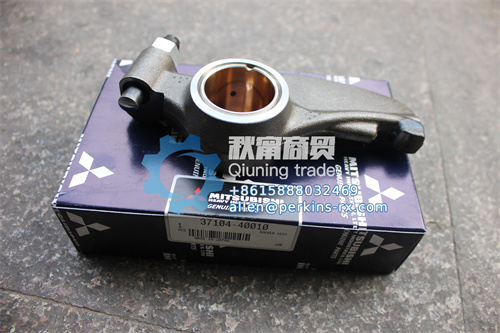
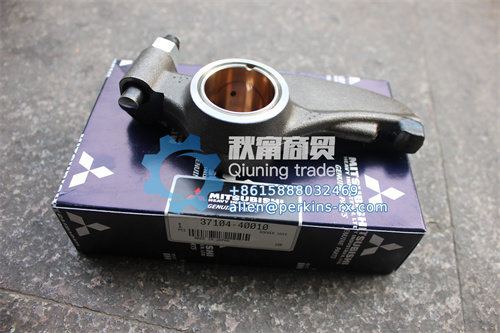
The "force transmission hub" of the valve system - Mitsubishi rocker arm 33517-08100 from Japan
In the engine valve system, the rocker arm is the "power transmission bridge" that connects the camshaft and valves. Its strength and force transmission accuracy directly determine the timing of valve opening and closing, sealing degree, and valve efficiency. The Mitsubishi 33517-08100 rocker arm from Japan, with "original factory level force transmission adaptation" and "impact and wear resistance characteristics" as its core, has become a reliable guarantee for the valve system of heavy-duty equipment. Its value lies not only in "transmitting force", but also in its dual function of "stable opening and closing, and valve protection".
As a Mitsubishi original accessory, its length and shaft hole spacing are perfectly matched with the camshaft and valve tappet (specific compatible models can be consulted with customer service). The arm body curvature calibrated by original mechanical testing ensures that when the camshaft rotates, the force is transmitted vertically to the valve (deviation ≤ 0.5 °), avoiding the "lateral force" caused by size deviation of the universal rocker arm - which can easily cause valve stem bending and guide pipe wear (commonly seen in inferior parts). This "exclusive adaptation" enables precise valve opening and closing angles (error ≤ 1 °), reducing cylinder pressure drop and power loss caused by inaccurate valve allocation from the source.
Material focusing on impact resistance and wear resistance: The arm body is forged with chromium molybdenum alloy (tensile strength up to 800MPa), which can withstand the instantaneous impact force of the camshaft (over 500N), avoiding deformation of the arm body during heavy load operations (such as rapid acceleration of excavators); The shaft sleeve adopts high carbon steel nitriding treatment (surface hardness HV800), which reduces the friction coefficient with the rocker arm shaft by 30% compared to ordinary shaft sleeves, adapts to high-frequency engine vibration (more than 2000 opening and closing times per minute), and reduces the wear rate by 60%.
The implicit value of adapting to scenarios is significant: in dusty and high vibration environments such as mines and construction sites, stable force transmission reduces valve noise (reducing equipment noise pollution); Accurate opening and closing improves cylinder ventilation efficiency by 8% (more complete combustion, reduced fuel consumption by 4%); The wear-resistant design extends the lifespan of the rocker arm to 1.5 times that of ordinary accessories, reducing the frequency of downtime and replacement (saving more than 2 hours for a single maintenance). If the rocker arm fails, the valve may open late or close early (power attenuation), and in severe cases, the valve may collide with the piston (risk of cylinder body failure), resulting in losses far exceeding the parts themselves.