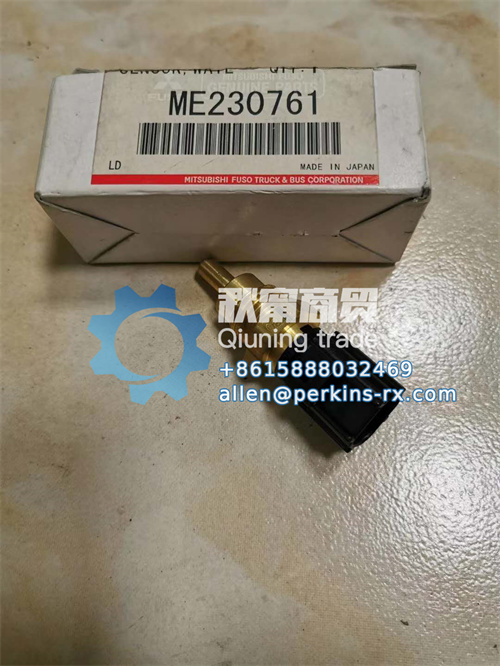
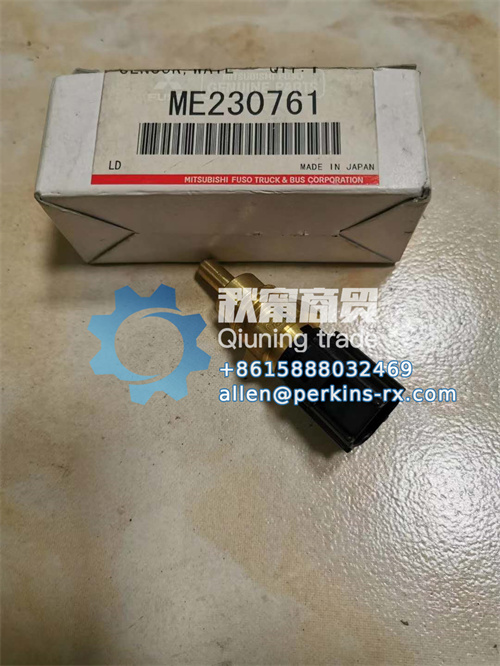
The "Perception Neural" of Equipment Control System - Mitsubishi Sensor ME230761
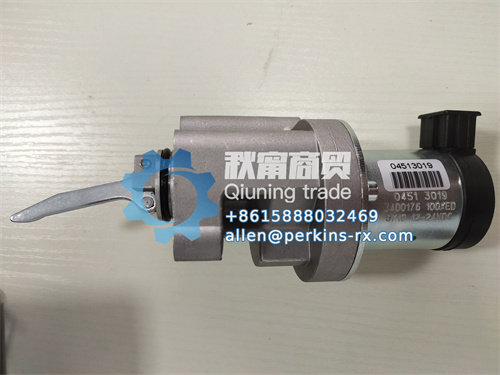
In the operation of equipment, sensors are the "nerve endings" that sense working conditions and transmit signals. Their detection accuracy and signal stability directly determine the response speed of the control system, the safety of equipment operation, and the ability to warn of faults. The Mitsubishi ME230761 sensor, with "original factory level signal adaptation" and "full scene anti-interference characteristics" as its core, has become a reliable sensing component for heavy-duty equipment. Its value lies not only in "detecting parameters", but also in its dual role as a "quasi sensing and stability control system".
As an original Mitsubishi accessory, its signal output protocol, detection range, and equipment control system are fully synchronized (specific compatible models can be consulted with customer service). The circuit design optimized through original electromagnetic compatibility testing ensures that the signal transmission error is ≤ 0.5% in strong electromagnetic environments of equipment (such as near motors and frequency converters), avoiding "signal distortion" (control system misjudgment) or "delayed response" (equipment action lag) caused by matching deviation of general sensors. This' native adaptation 'enables precise linkage between detection data and control systems, eliminating operational failures caused by perception bias from the source.
Material focus on complex environmental tolerance: The shell is made of UV resistant engineering plastic (with a 50% improvement in aging resistance compared to ordinary plastic), and the detection components are sealed and glued. The waterproof level reaches IP67 (able to withstand short-term immersion), suitable for rainy season construction sites, high humidity mining areas and other scenarios. The internal circuit adopts a wide temperature design, which can stably output signals even when starting at -40 ℃, avoiding detection failure caused by low temperature (commonly seen in inferior sensors).
The implicit value is reflected in multiple aspects: precise signals enable the equipment control system to adjust more timely (such as engine fuel injection and hydraulic valve action), reducing operating energy consumption by 4% -6%; Anti interference characteristics reduce false alarms (downtime for troubleshooting is reduced by 80%); Durable design extends the replacement cycle (30% longer than ordinary sensors) and reduces maintenance costs. If the sensor fails, it can result in unstable equipment operation (such as speed fluctuations), or serious safety hazards such as overload and overheating due to missing parameter detection, significantly increasing maintenance costs.