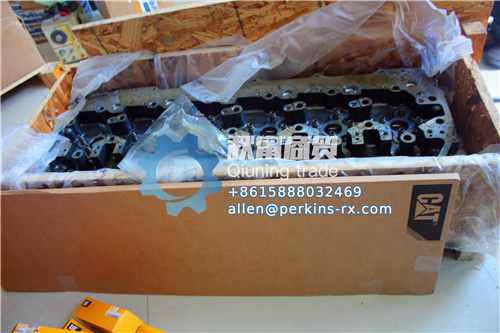
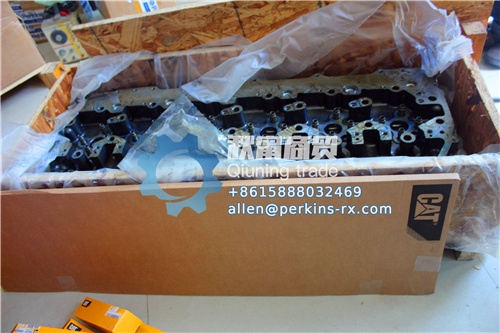
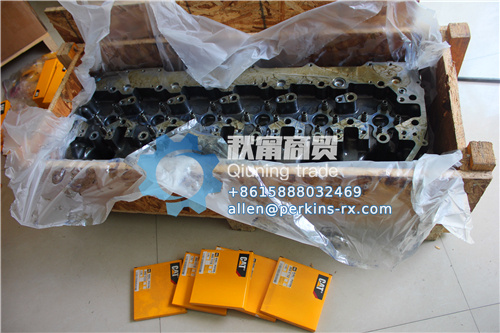
The "solid foundation" of the core power of the engine - the Caterpillar CAT C13 cylinder head assembly
In the power system of a diesel engine, the cylinder head assembly serves as the "upper barrier" of the combustion chamber, directly affecting combustion efficiency, heat dissipation performance and the overall reliability of the machine. The CAT C13 cylinder head assembly, with "original factory-level full-process technology" and "working condition-based structural design" at its core, has become the key to the stable operation of heavy-duty equipment. Its core value lies in the deep integration of "precise pressure control" and "full-cycle durability".
1. Original Factory Compatibility: Eliminate the risk of "power loss"
As an original parts of Caterpillar, the bolt hole positions, valve seat ring depths and fuel injector installation angles of the C13 cylinder head assembly are all 100% matched with the engine block through 3D scanning technology (for specific compatible models, please consult customer service). The arc of the combustion chamber pit has been optimized by the original factory's CFD fluid simulation to ensure uniform fit clearance with the piston top, avoiding the "cylinder pressure leakage" or "incomplete combustion" caused by dimensional deviations in general cylinder heads, and guaranteeing the efficient conversion of each burst energy from the source.
Ii. Materials and Craftsmanship: Hard Power to Cope with Extreme Working Conditions
It is precisely cast from A356-T6 high-strength aluminum alloy and undergoes 12-hour aging treatment to eliminate internal stress. Its tensile strength exceeds 300MPa and it can withstand a combustion explosion pressure of over 120bar (equivalent to the extreme load when a fully loaded loader is climbing a slope). The internal cooling water channel adopts a "spiral flow diversion design", which increases the heat dissipation efficiency by 25% compared to the ordinary straight-line water channel, keeping the cylinder head temperature within 180℃ (avoiding deformation of the valve seat ring caused by overheating), and is particularly suitable for construction machinery that operates continuously for more than 10 hours.
Iii. Structural Design: The Protective Philosophy Hidden in the "Airway" and "Sealing Surface"
Air distribution system integration: The air intake duct is polished (roughness Ra≤1.6μm), reducing air flow resistance by 15% and enhancing air intake efficiency. The inner wall of the exhaust duct is coated with a high-temperature resistant coating to reduce carbon deposits and ensure smooth exhaust emissions.
Sealing surface strengthening: The mating surface between the cylinder head and the cylinder block is precisely ground (flatness error < 0.01mm), and when combined with the original factory gasket, it can achieve "zero-gap sealing", preventing coolant from seeping into the combustion chamber or gas leakage.
Lightweight design: Under the premise of maintaining strength, the weight is 30% less than that of cast iron cylinder heads, reducing the load on the front end of the engine and indirectly extending the service life of crankshaft bearings.
Iv. "Implicit Empowerment" of Engines
Stable cylinder head performance actually builds a "multiple protection chain" for the engine:
Combustion optimization: The precise combustion chamber structure ensures more uniform fuel atomization, increasing combustion efficiency by 6%. Under the same fuel consumption, the power output is stronger, making it particularly suitable for heavy-load starts of mining equipment.
Heat dissipation guarantee: The efficient waterway design prevents valve overheating and jamming, reducing the risk of valve seal failure caused by poor heat dissipation (this fault accounts for more than 20% of the reasons for engine major overhauls).
Fault prevention: The high-strength material can resist long-term high-frequency vibration (such as in the crushing operation conditions of excavators), reducing the probability of fatal faults such as cylinder head cracks and bolt hole wear, and lowering maintenance costs by 40%.
Choosing the original factory cylinder head assembly is essentially purchasing "full-cycle insurance" for the core components of the engine, avoiding downtime losses and complex maintenance caused by the failure of parts.
Maintenance suggestions
It is recommended to check the condition of the cylinder head during major engine overhauls or every 5,000 hours of operation, with a focus on observing whether there are scratches, cracks or carbon deposits on the sealing surface. When replacing, the original factory gasket should be replaced simultaneously. Use a torque wrench to tighten the bolts in three steps in the diagonal sequence (the final torque is 220-240N · m) to ensure uniform force distribution. If abnormal coolant consumption or white smoke is detected in the exhaust during daily use, it is necessary to promptly check the sealing of the cylinder head.
The Caterpillar CAT C13 cylinder head assembly defines the power core standard with "original factory precision" and responds to extreme loads with "structural demands". It is not merely a mechanical component, but also the "solid foundation" for the efficient operation of the engine - from material craftsmanship to sealing design, every detail empowers the power output, reliability and economy of the equipment. Choosing the original factory cylinder head means choosing the maintenance approach of "strong power and few malfunctions", ensuring that the core power of construction machinery remains stable and strong throughout its heavy-load journey.