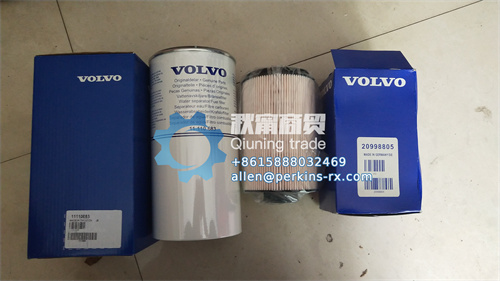
The "all-round protective barrier" of the fuel system - Mitsubishi 32562-60300 diesel filter
In the engine fuel system, the diesel filter is the "first line of defense" against impurities and harmful substances, and its quality directly determines the service life of precision components such as fuel injectors and fuel pumps. The Mitsubishi 32562-60300 diesel filter, with "original factory-level precise matching" and "three-dimensional purification technology" at its core, has become a reliable guardian of the fuel system under complex working conditions. Its core value lies in the deep integration of "zero tolerance for impurities" and "strong adaptability to working conditions".
1. Original factory Compatibility: Eliminate the risk of "filter interruption"
As an original Mitsubishi component, the interface size and sealing structure of 32562-60300 are perfectly matched with the engine fuel pipeline (for specific compatible models, please consult customer service). The filter element pore size and flow channel layout designed through the original factory fluid mechanics simulation ensure that the pressure loss during fuel flow is controlled within 0.3bar (better than the industry average), which not only avoids insufficient fuel supply due to excessive resistance but also prevents "impurity penetration" caused by incomplete filtration. This "native adaptation" enables the filter to work seamlessly with the fuel system, eliminating the risk of abnormal fuel injection caused by adaptation deviations from the source.
Ii. Three-dimensional Purification Technology: Three-level barrier to block pollutants
It adopts a three-layer purification structure of "pre-filtration - fine filtration - adsorption" :
Outer pre-filter layer: High-strength glass fiber mesh quickly intercepts large particles of impurities over 50 microns (such as rust and sand), with a filtration efficiency of up to 99%, reducing the load on the inner layer.
Middle fine filter layer: Micron-sized filter paper captures fine impurities of 5-20 microns (such as metal powder, fuel oxidation products), ensuring that the fuel cleanliness entering the injector meets the original factory standards.
Inner adsorption layer: The activated carbon composite material adsorbs sulfides, moisture and resins in the fuel, reducing the risk of acidic substances corroding the fuel injectors. It is especially suitable for fuel environments with high sulfur content.
The three-layer synergy achieves a three-dimensional purification process from "coarse filtration" to "fine filtration" and then to "chemical protection", which is 40% higher than the comprehensive protection capacity of a single filter material or filter element.
Iii. Durable Design: Fully capable of meeting demanding challenges in all scenarios
Shell strength: Made of aviation-grade nylon composite material, its resistance to fuel corrosion is 50% higher than that of ordinary plastic. It can withstand an instantaneous fuel pressure impact of 25bar, preventing shell deformation or filter material damage under high pressure.
Sealing system: Dual sealing ring design (main seal + auxiliary seal), combined with high-precision threaded filter seats, maintains zero leakage even in a temperature difference of -40 ℃ to 80℃, eliminating the "unfiltered ypass" phenomenon of fuel.
Anti-vibration structure: The internal support frame of the filter element has been strengthened to resist the high-frequency vibration (amplitude ≤3mm) during the operation of construction machinery, preventing the filter material from breaking due to vibration and thus avoiding filtration failure.
Actual measurements show that in harsh environments with dust content exceeding 50mg/m³, the effective service life of the original factory filter is 50% longer than that of the aftermarket parts, significantly reducing the replacement frequency and maintenance costs.
Iv. The "Implicit Enabling Value" of Engines
Clean fuel is the cornerstone for the efficient operation of an engine, and the core value of the 32562-60300 filter lies in its "triple protection" :
Extended service life of fuel injection system: Efficient interception of impurities and corrosive substances reduces the risk of needle valve jamming of fuel injectors by 70%, and extends the maintenance cycle from 12 months to over 18 months.
Combustion efficiency improvement: Fuel cleanliness meets standards, atomization particle diameter is controlled within 80 microns (better than industry standards), engine power output is stronger, and fuel consumption is reduced by 6% to 10%.
Enhanced system stability: The anti-vibration and temperature-resistant design reduces fuel supply interruption caused by filter failure. Especially in extreme working conditions such as high-altitude climbing and low-temperature start-up, the equipment failure rate drops by 35%.
Choosing an original diesel filter is essentially a "preventive investment" in the core components of the engine, avoiding the high maintenance costs of losing the big picture for small gains.
Maintenance suggestions
It is recommended to replace the filter every 20,000 kilometers or depending on the quality of the fuel (for poor-quality fuel, it should be shortened to 15,000 kilometers). When replacing, please note:
Clean the fuel filter seat simultaneously to remove residual impurities and gum.
Check the condition of the sealing ring. If it is aged or deformed, replace it together.
Before use in low-temperature areas, the fuel preheating device can be used to reduce water condensation and improve the efficiency of the filter.
Mitsubishi 32562-60300 diesel filter defines the filtration standard with "original factory genes" and uses "three-dimensional protection" to deal with complex working conditions. It is not merely a filtering component but also a "comprehensive protective barrier" for the fuel system - from material selection to structural design, from impurity interception to durability optimization, every detail is empowering the reliability, economy and long-term performance of the equipment. Choosing the original factory filter means choosing the maintenance approach of "low failure rate and long service life", ensuring that the engine always maintains powerful performance and stable performance on the heavy-load journey.