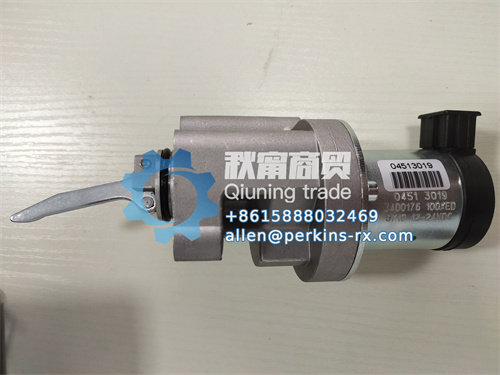
The 'Constant Pressure Delivery Center' of Fuel System - Deutz 04272819 Fuel Transfer Pump
The fuel transfer pump is the "power conveyor belt" of the fuel system, responsible for steadily delivering fuel from the fuel tank to the injectors. The stability of its delivery pressure directly affects the injection accuracy and engine power output. The DEUTZ 04272819 fuel pump, with its original factory level design and optimized details, has become the core of ensuring efficient fuel delivery. Its value lies in the dual advantages of "constant pressure and stable supply" and "low consumption protection system".
As an original accessory of Deutz, the interface specifications and flow parameters of 04272819 are fully matched with the engine fuel pipeline and injection system (specific compatible models can be consulted with customer service). The internal valve core stroke and pressure feedback mechanism have been calibrated by the original factory and can dynamically adjust the fuel delivery according to the engine load: low flow stable supply during idle, avoiding fuel waste; High flow output during heavy load to ensure fuel injector demand. This "on-demand delivery" feature avoids the common problem of "fluctuating pressure" in general fuel pumps, reducing engine shaking and power fluctuations caused by unstable fuel supply from the source.
Material and craftsmanship focus on "high load tolerance". The valve core is made of high hardness alloy material and undergoes mirror polishing treatment, reducing the wear rate by 35% compared to ordinary steel. Even in the presence of trace impurities in the fuel, it can still maintain smooth operation; The shell adopts integral die-casting technology, which improves the anti vibration performance by 25% and can resist high-frequency vibration during the bumpy operation of construction machinery, avoiding loose pipeline interfaces and oil leakage. This design allows the fuel pump to stably deliver fuel even in scenarios such as continuous high-speed driving of commercial vehicles for 10 hours and heavy load operation of construction machinery for 12 hours a day, with a lifespan 40% longer than that of auxiliary components.
Its implicit protection of the fuel system is particularly critical: constant pressure fuel supply can avoid wear and tear of the fuel injector caused by sudden pressure changes, reducing carbon deposition; Low loss design reduces energy loss during fuel delivery, indirectly improving engine fuel efficiency. If the fuel pump fails, it can cause a sudden drop in power due to insufficient fuel supply from the fuel injector, or damage to the fuel injector due to pressure imbalance, resulting in significantly increased maintenance costs. Choosing the original fuel pump actually builds a "stable delivery defense line" for the fuel system, forming a virtuous cycle of efficient operation and low consumption durability.
Maintenance suggestion: It is recommended to check the pressure stability of the fuel pump every 100000 kilometers (which can be detected by professional equipment), and replace it in a timely manner if fuel supply delay or pressure fluctuation is found; When replacing, prioritize using original parts to ensure compatibility with fuel pipelines and injection system parameters, and avoid affecting delivery efficiency due to improper adaptation.