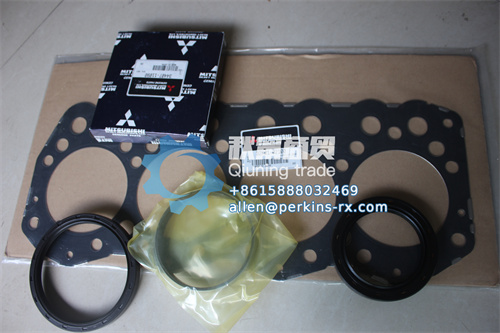
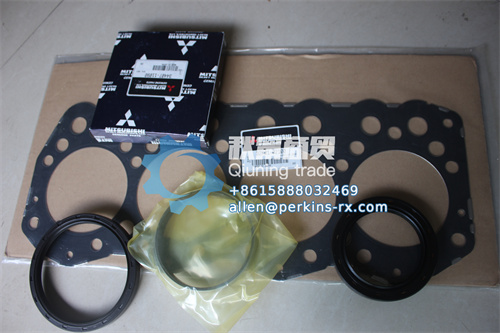
The efficient operation of an engine cannot do without the support of a "confined space" : cylinder gaskets seal the cylinder block and cylinder head, and piston rings control the balance of oil and gas inside the cylinder. Although their functions are different, they jointly safeguard the core performance of the engine. This pair of original factory parts from Mitsubishi, with their "precise matching" and "performance synergy", have become a key combination to ensure power output.
Cylinder gasket 32k01-02100: The "First Line of Defense" against leakage
As a sealing component between the cylinder block and the cylinder head, it needs to withstand the high-temperature and high-pressure gas impact of over 1000℃ in the combustion chamber. Mitsubishi adopts a multi-layer composite structure: high-temperature resistant metal foil is placed in the middle, oil-resistant asbestos fibers are covered on both sides, and metal frames are embedded at the edges for reinforcement. This design enables it to not only seal the coolant and engine oil channels (preventing cross-contamination), but also block high-pressure gas leakage. Once the seal fails, the consequences can range from coolant entering the combustion chamber (emitting white smoke) to cylinder scuffing and explosion. The original factory-level dimensional accuracy (tolerance ≤0.02mm) ensures a complete fit with the cylinder block groove, eliminating such risks from the source.
Piston Ring 34407-11090: A "Double Expert" in Oil Control and Sealing
Piston rings may seem simple, but they shoulder three responsibilities: sealing gas (preventing it from entering the crankcase), scraping off excess engine oil from the cylinder wall (controlling oil), and assisting in heat dissipation. This Mitsubishi model is made of alloy cast iron and chrome plating, with a 40% increase in surface hardness. It is wear-resistant and less prone to carbon deposits. Its cut Angle and elasticity have been calibrated by the original factory, which can not only closely adhere to the cylinder wall (to prevent gas leakage), but also avoid excessive oil scraping that leads to insufficient lubrication of the cylinder wall - this "precise balance" directly reduces oil consumption and power loss, and is especially suitable for engines that operate at high loads for a long time.
Collaborative value: An efficiency guarantee where 1+1 > 2
Both accessories are certified by Mitsubishi's original factory, and their dimensions are exactly matched with the engine structure: the bolt holes of the cylinder gasket precisely correspond to the cylinder head screws, avoiding installation deformation. The thickness of the piston ring and the opening gap are adapted to the piston groove to reduce operational jamming. This "original factory collaboration" feature ensures more stable combustion chamber airtightness - without gas leakage, combustion is more complete (reducing fuel consumption), and without engine oil entering the cylinder block, carbon deposits are reduced (extending the lifespan of spark plugs and three-way catalytic converters), indirectly lowering the probability of major engine overhauls.
Maintenance suggestion: It is recommended to replace it simultaneously during major engine overhauls (usually every 200,000 kilometers or more, adjusted according to working conditions). During replacement, ensure that the cylinder block and cylinder head surfaces are flat to avoid affecting the sealing effect due to improper installation. Give priority to choosing original factory combinations to avoid "hidden wear and tear" caused by mismatched accessories.