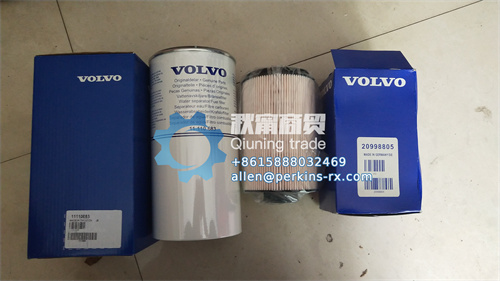
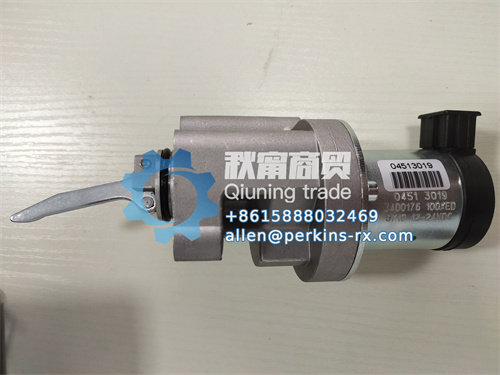
Ningbo Qiuning Trading Co., Ltd. offers a comprehensive range of Caterpillar engine parts, covering key components from multiple engine series. From the core four-component assembly (piston, piston rings, piston pin, and cylinder liner) to essential maintenance filters, we provide a one-stop shopping solution.
Our parts are compatible with a variety of Caterpillar engine models, including the C7, C15, C18, and C32, meeting the needs of diverse applications such as construction machinery, generator sets, and marine propulsion.
Core Parts Detailed Explanation
1. Four-component Assembly
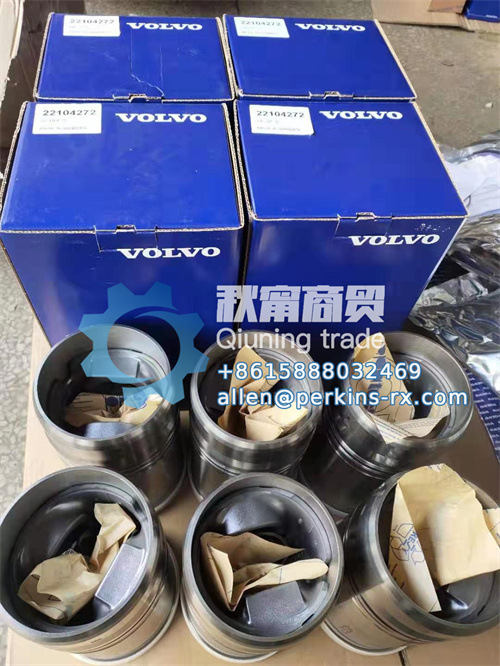
The four-component assembly is the "heart" of the engine, including the piston, piston rings, piston pin, and cylinder liner.
The piston reciprocates at high speed within the cylinder, enduring high temperatures and high pressures, transmitting the explosive force of the combustion gas to the crankshaft. High-quality pistons offer superior heat and wear resistance, effectively optimizing the combustion process.
Piston rings: Divided into gas rings and oil rings, they seal the combustion chamber to prevent gas leakage and scrape excess oil from the cylinder wall to prevent oil burning.
Piston pin: Connects the piston to the connecting rod, converting piston motion into crankshaft rotation, and must withstand significant impact and friction.
Cylinder liner: Provides a wear-resistant surface for piston movement, withstanding high temperatures, high pressures, and lateral piston forces. High-quality cylinder liners undergo a special treatment to minimize roughness and provide excellent lubrication, significantly extending engine life.
2. Filter System
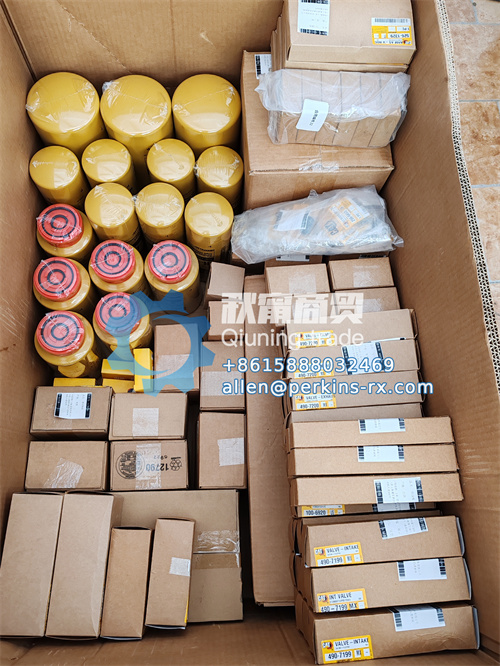
Air filter: The intake system's "first line of defense," effectively trapping tiny impurities and ensuring the purity of air entering the engine. In dusty and harsh operating conditions, it should be inspected every 100-200 hours; in relatively clean environments, it should be replaced every 500-1000 hours.
Fuel filter: The fuel system's "loyal guardian," equipped with multi-stage filtration, from coarse to fine filtration, ensuring fuel purity meets the stringent requirements of the high-pressure common rail system. It generally needs to be replaced every 500-1000 hours of operation.
Oil filter: The engine's "scavenger," effectively trapping impurities such as metal debris and carbon deposits, providing a clean lubricating environment for the engine. It's recommended to replace it every 250-500 hours, depending on operating conditions.
3. Cooling System Components
The cooling system ensures the engine remains cool even in high temperatures and primarily consists of the water pump, coolant, and coolant filter.
The water pump: The "power heart" of the cooling system, circulates coolant between the engine and radiator to ensure timely heat dissipation.
Coolant: Not only does it provide antifreeze, it also effectively inhibits corrosion and protects metal surfaces within the cooling system.
Coolant filter: It traps impurities such as rust and scale in the coolant, preventing them from accumulating and clogging the coolant channels, potentially affecting heat dissipation.
Scientific Maintenance Guide
Daily Inspection and Periodic Maintenance
Daily Inspection:
Check the coolant level daily to ensure it is between the minimum and maximum marks.
Check the engine oil level regularly to ensure it is adequate.
Check the engine air filter to protect the engine from particulate matter.
Drain the water from the fuel system primary filter/water separator.
Periodic Maintenance:
Every 250 operating hours: Change the engine oil and filter, check the battery electrolyte level, and lubricate the fan bearings.
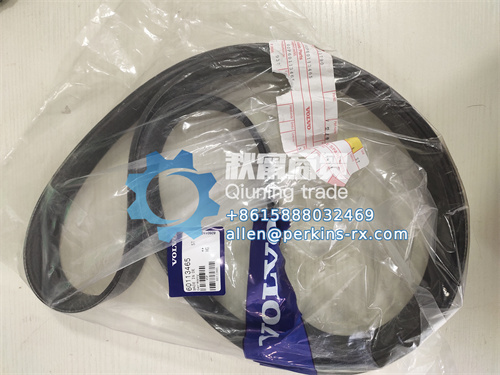
Every 500 operating hours: Check the turbocharger and water pump, and check if the belt needs adjustment and replacement.
Every 3,000 operating hours or three years: Check the crankshaft damper, clean the engine and aftercooler core, and replace the coolant thermostat.
Professional Maintenance Recommendations
Fuel System Maintenance: Regularly inspect fuel lines and connections to ensure leaks and durability. Use high-quality fuel and avoid using low-quality fuel to prevent damage to the injectors.
Valve System Adjustment: Carter C18 engines require valve clearance inspection and adjustment every 5,000 operating hours. Actual test data shows that valves that have not been adjusted beyond their due date can increase fuel consumption by 8%-12%.
Lubrication System Maintenance: Use 15W-40 engine oil that meets Cat ECF-3 standards. Under normal operating conditions, the oil should be changed every 500 hours or 6 months. In high-dust or high-temperature environments, the interval should be shortened to 300 hours.
 Tips for Extending Accessory Lifespan
Follow regular maintenance intervals: Strictly follow the maintenance manual for operation and maintenance, using the correct tools and equipment.
Use High-Quality Parts: High-quality parts can better withstand the stress of prolonged, high-load engine operation, ensuring stable operation.
Attention to the Working Environment: Avoid prolonged operation in harsh environments; maintenance intervals may need to be adjusted for different environments. When operating in desert areas, the cyclone dust exhaust valve on the pre-filter must be manually drained after each shift.
Regular Professional Inspections: Test the injection pressure of the common rail system injectors every 2000 hours. Any deviation exceeding 10% requires immediate replacement.
Establish a Maintenance Record: Record complete data from each maintenance session to provide a foundation for subsequent lifespan predictions and achieve more accurate maintenance.
Purchasing and Service
Ningbo Qiuning Trading Co., Ltd. is dedicated to providing customers with comprehensive Caterpillar engine parts solutions. We understand the needs of your equipment under different operating conditions and can recommend the most suitable parts combination.
Revitalize your Caterpillar engine!
For more information on Caterpillar engine parts or professional purchasing advice, please feel free to contact us:
Email: allen@perkins-rx.com
Website: http://www.cnqn.net/
WhatsApp/WeChat: +8615888032469
Tips for Extending Accessory Lifespan
Follow regular maintenance intervals: Strictly follow the maintenance manual for operation and maintenance, using the correct tools and equipment.
Use High-Quality Parts: High-quality parts can better withstand the stress of prolonged, high-load engine operation, ensuring stable operation.
Attention to the Working Environment: Avoid prolonged operation in harsh environments; maintenance intervals may need to be adjusted for different environments. When operating in desert areas, the cyclone dust exhaust valve on the pre-filter must be manually drained after each shift.
Regular Professional Inspections: Test the injection pressure of the common rail system injectors every 2000 hours. Any deviation exceeding 10% requires immediate replacement.
Establish a Maintenance Record: Record complete data from each maintenance session to provide a foundation for subsequent lifespan predictions and achieve more accurate maintenance.
Purchasing and Service
Ningbo Qiuning Trading Co., Ltd. is dedicated to providing customers with comprehensive Caterpillar engine parts solutions. We understand the needs of your equipment under different operating conditions and can recommend the most suitable parts combination.
Revitalize your Caterpillar engine!
For more information on Caterpillar engine parts or professional purchasing advice, please feel free to contact us:
Email: allen@perkins-rx.com
Website: http://www.cnqn.net/
WhatsApp/WeChat: +8615888032469
Caterpillar (CAT) is a world-renowned manufacturer of construction machinery and power systems. Its engine portfolio is extensive, encompassing diesel engines, natural gas engines, and industrial power systems. These engines are widely used in construction machinery, mining equipment, ships, generator sets, and industrial power. The main series are as follows:
Major Caterpillar Engine Series
1. Small Engine Series
Suitable for light construction machinery and industrial equipment:
CAT C1.1–C4.4 Series
CAT 3054C/3056E
Power Range: 10kW–130kW
Commonly used in small excavators, loaders, and generator sets.
2. Medium Engine Series
Commonly used in medium-to-large construction machinery and generator sets:
CAT C6.6/C7.1
CAT C9/C9.3B
CAT C11/C13/C15
Power Range: 130kW–600kW
Suitable for medium-sized excavators, bulldozers, trucks, and ship propulsion.
3. Large Engine Series
High power, suitable for mining machinery, ships, and heavy power generation equipment:
CAT C18 / C27 / C32
CAT 3406 / 3412
CAT 3508 / 3512 / 3516
CAT C175 Series
Power range: 600kW – 5000kW+
Commonly used in mining trucks, oilfield equipment, large generator sets, and marine engines.
4. Ultra-large Engines (for mining/shipping/power plants)
CAT 3600 Series (3606 / 3612 / 3616)
CAT 3500 Series High-power version
CAT CM Series Marine Engines
Power exceeding 7000kW
Suitable for ship propulsion, offshore drilling platforms, and power plant main engines.
5. Perkins/CAT Industrial Series (Partially Merged)
Some small engines are supplied by Perkins, for example:
The CAT 3054/3056 is based on the Perkins 1100 series.
The CAT C4.4 is technically related to the Perkins 1200 series.
Applications:
Construction Machinery: Excavators, bulldozers, loaders, rollers.
Mining Equipment: Dump trucks, drilling rigs.
Marine Power: Main engines, auxiliary engines, generator sets.
Power Systems: Backup power, primary power.
Industrial Power: Oil and gas, agricultural machinery.